Human-Centered Design for Prediabetes Engagement.
ROLE(s)
Co-Lead, Human-Centered Design
Service
Concept Framing & Development
Research & Insight Development
In-Market Prototyping
Cross-Functional Alignment
When
2015 - 2016
UnitedHealthcare
& AARP
Claim More was an enterprise innovation initiative designed to explore whether human-centered framing and in-market experimentation could shift engagement patterns by connecting health motivation to people’s aspirations and everyday lives.
Rather than approaching prediabetes engagement solely as a clinical or behavioral framing problem, this work explored whether trusted community institutions — specifically churches — could influence awareness, receptivity, and early engagement in ways traditional healthcare channels often cannot.
The initiative examined how health information is received when introduced through environments where trust, values, and social relationships already exist. By partnering with faith-based organizations, the work tested whether preventive health messages could feel more relevant, credible, and actionable before individuals experience clinical urgency.
Claim More was designed not as a scalable product, but as an in-market learning effort to better understand the role of trust, authority, and context in shaping preventive health behavior.




Problem + Opportunity
The core challenge was not simply how prediabetes was described, but who the message came from and why it was trusted.
Traditional outreach about prediabetes is often delivered through clinical or institutional channels and framed around risk, disease progression, and future consequences. For many individuals who do not yet feel sick, this messaging is easy to ignore — not only because of the language used, but because the messenger lacks personal relevance or trust.
The opportunity was to explore whether a trusted, community-embedded authority — the church — could influence awareness, openness, and early behavior change in ways that traditional healthcare channels could not.
Specifically, the work aimed to:
Understand how health messages are received when delivered by a trusted community institution
Explore how faith-based context and existing trust relationships shape motivation and receptivity
Test whether preventive health engagement could be increased when information was introduced through familiar, values-aligned environments
This was not a conventional product problem. It was an exploration of trust, authority, and context — and how these factors influence whether people hear, believe, and act on preventive health information.
Approach
1.
Deep Qualitative Insight
We began with a multi-modal qualitative research phase to understand how people think about risk, health goals, identity, and daily trade-offs. A major insight emerged: people are motivated by aspirations — energy, independence, confidence — rather than fear of future health states. This shifted the problem frame from disease risk to desired life outcomes.
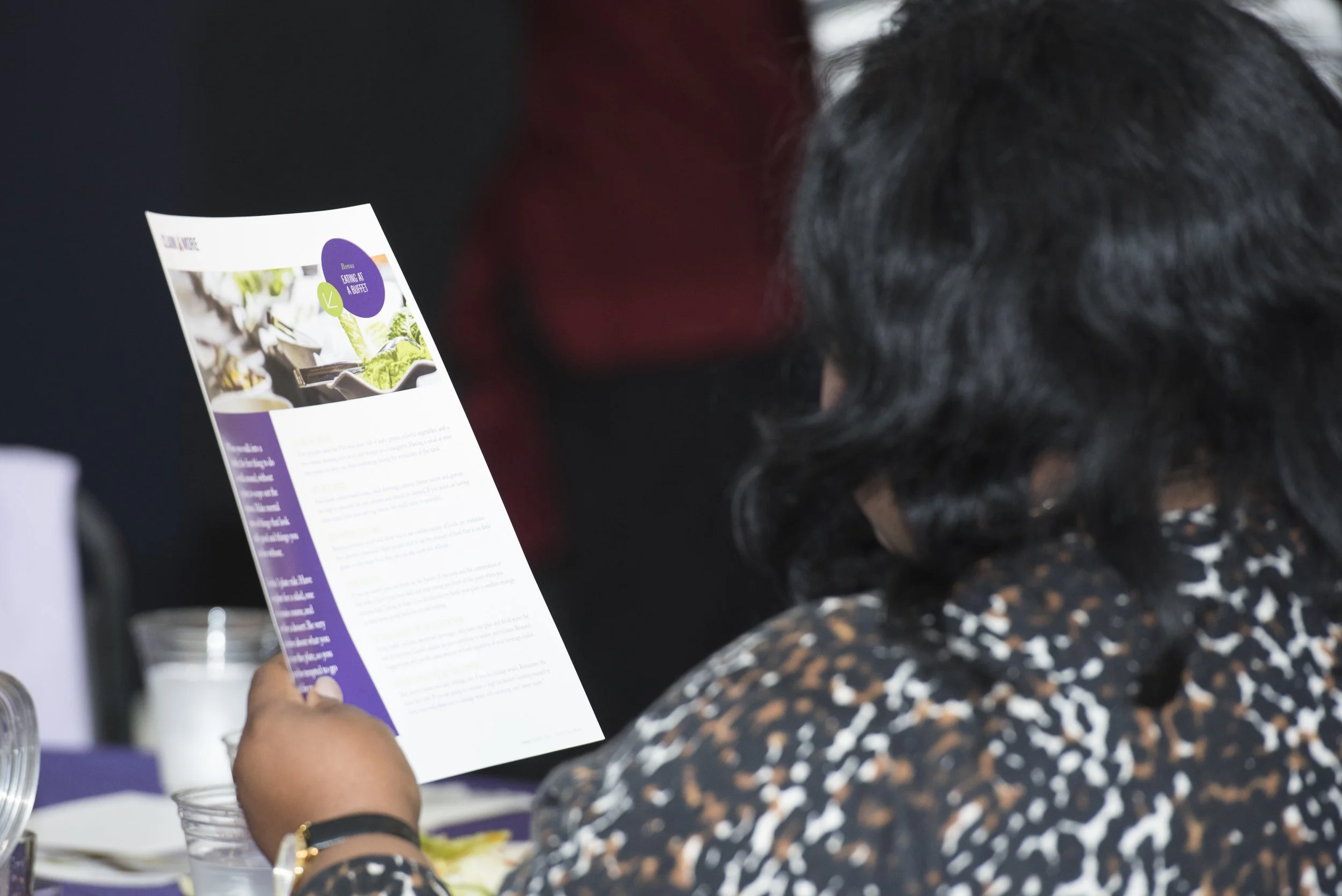
The pilot program was developed to determine if the utilization of the church setting, weekly classes, and daily text messages would be feasible with the intent of extending the program to other churches and ultimately other community groups in the area.
2.
Reframing the Experience
Using research insights, we developed Claim More — a concept that positioned preventive health as a way to claim more of the life people want. This reframing informed:
Core language and narrative principles
Behavioral triggers tied to personal aspiration
Prototype concepts that moved beyond clinical messaging
3.
Cross-Functional Alignment & Recommendation
I co-led the translation of research insights into strategic concept frameworks that could be evaluated and built. This included:
Synthesis of qualitative themes into design principles
Concept narratives and experience flows
Alignment with clinical and product stakeholders on constraints and guardrails
4.
In-Market Prototyping
Rather than stopping at concept validation, we launched a lean in-market prototype to test engagement, comprehension, and response. This phase prioritized:
Real-world measurement over lab measures
Iterative learning cycles
Comparison with existing outreach approaches
This experimental mindset allowed us to move beyond desirability into viability learning — understanding whether the reframed experience could actually influence early decision behavior.


Outcomes
Completed a real-world, human-centered prototyping effort to test engagement models for prediabetes
Demonstrated early signals that aspiration-based framing increased openness and engagement compared to traditional clinical outreach
Generated insights that informed subsequent strategy for preventive and behavior change experiences
Achieved improvements in health outcomes including A1C
Reflection
Claim More reinforced a core principle: how we frame health matters as much as what we offer. In contexts where people don’t feel sick yet are at risk, messaging anchored in aspiration, identity, and personal meaning invites attention and curiosity in ways that clinical risk framing often does not.
The work also demonstrated the value — and difficulty — of moving design from research into in-market learning within complex healthcare systems.
What This Work Demonstrates
Applying human-centered design to behavior change and motivational framing
Translating qualitative insight into strategic experience concepts
Designing and executing lean in-market prototypes in enterprise contexts
Bridging research, product thinking, and real-world experimentation